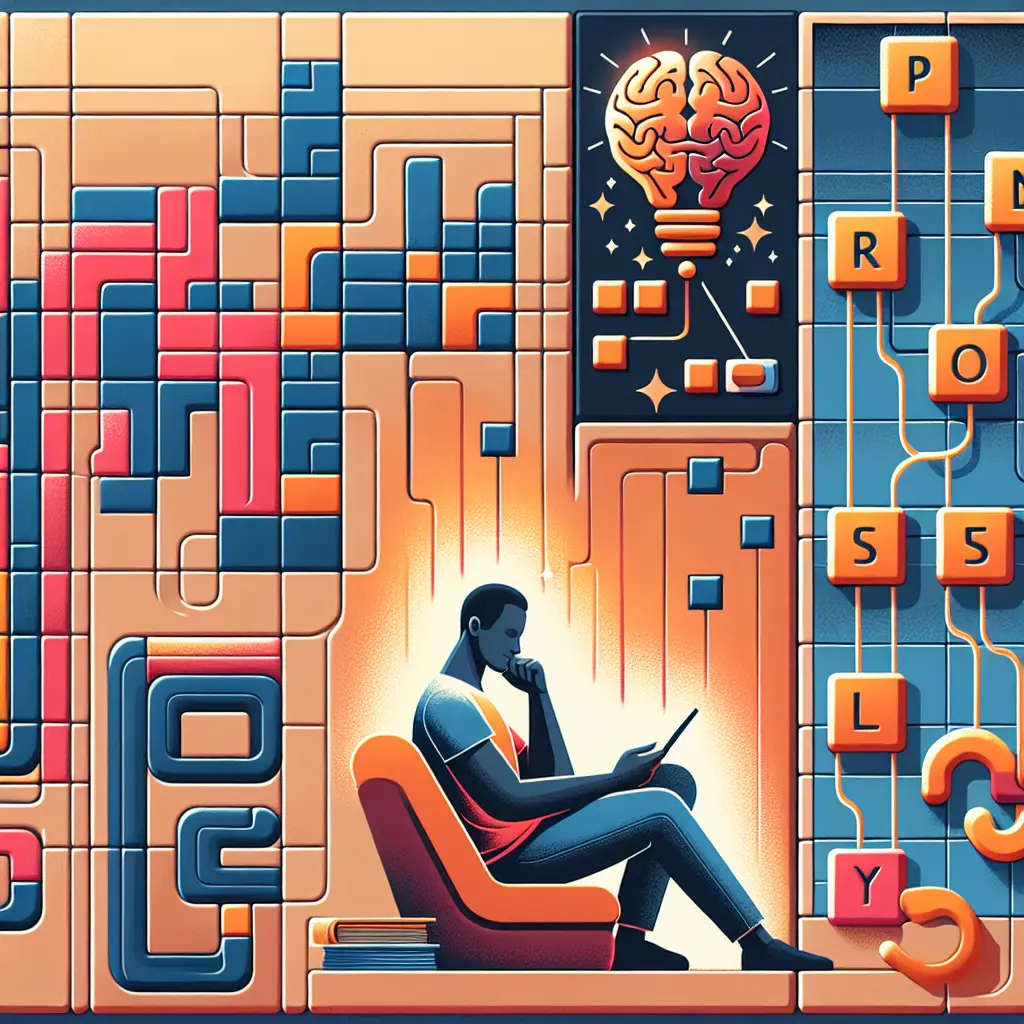
The Psychology Behind Word Puzzle Games
Understanding the Intricate World of Word Puzzles
In recent years, word puzzle games have soared in popularity, evolving from simple entertainment to becoming essential tools for enhancing cognitive functions and promoting mental well-being. These puzzles reveal a myriad of psychological benefits, offering more than just a way to pass the time. Whether you're engaging with daily challenges like Wordle or exploring the complexities of NYT Connections, word puzzles present psychological effects that benefit individuals across all age groups.
Cognitive Benefits of Puzzles
One of the standout cognitive benefits of puzzles is their ability to enhance problem-solving skills. Engaging with word puzzles requires critical and strategic thinking, often utilizing deductive reasoning to find solutions. For example, Wordle challenges players worldwide to guess a five-letter word within six attempts. This kind of daily mental exercise sharpens the mind and gradually improves problem-solving skills.
Moreover, puzzles significantly contribute to memory improvement. As players work to recall previous guesses and patterns, they engage in brain training that enhances their recall abilities. This improvement is especially noticeable in older adults, who use puzzles to maintain cognitive health and delay memory-related disorders.
Mental Health and Puzzles: A Pathway to Stress Relief
Puzzles also offer stress relief beyond cognitive benefits. They provide a focused activity that allows individuals to temporarily escape daily stressors, reducing anxiety levels and promoting mental tranquility. The meditative nature of solving puzzles is akin to mindfulness practices, providing similar benefits in terms of stress reduction and emotional balance.
Educational Benefits of Word Puzzles
Beyond cognitive development, word puzzle games provide significant educational benefits. Engaging with these games naturally enhances vocabulary and language skills. For instance, regularly tackling the NYT Mini Crossword can help players expand their lexicon as they encounter new words and phrases.
Puzzles also foster creativity by encouraging players to explore various word combinations and solutions, sparking creative thinking. This creativity is a transferable skill that benefits individuals in both academic and professional settings.
Word Games and Critical Thinking
Word puzzles are excellent tools for nurturing critical thinking skills. They require players to analyze clues, discern patterns, and apply logic efficiently. Games like Connections demand higher cognitive engagement as players group words based on shared themes or categories. This type of analytical thinking is crucial for real-world problem-solving scenarios.
Moreover, critical thinking developed through puzzle-solving extends to other life areas, empowering individuals to make well-reasoned decisions and confidently approach challenges.
Puzzle-Solving and Concentration
The focused nature of solving word puzzles inherently fosters concentration. Regular engagement with these games trains the brain to maintain attention over extended periods—a skill increasingly valuable in our distraction-prone world. Effective concentration links to improved performance in various academic and professional tasks.
Emotional Benefits of Word Games
Beyond cognitive and educational gains, word games offer emotional benefits. Solving a puzzle releases dopamine, a neurotransmitter associated with pleasure and reward. This positive reinforcement encourages continued engagement with games, fostering a cycle of achievement and enjoyment.
Additionally, word games promote social interaction when played collaboratively. Family members or friends working together on puzzles can strengthen bonds through shared experiences and mutual support.
Case Studies: Wordle and NYT Connections in Action
Recent statistics indicate that millions engage daily with Wordle and Connections, two popular offerings from the New York Times. These games illustrate the widespread appeal and impact of word puzzles in contemporary society.
Wordle's daily challenge format keeps players returning regularly, while Connections encourages deeper analysis through thematic grouping. Both games exemplify how word puzzles can integrate seamlessly into daily routines, offering both entertainment and intellectual stimulation.
Conclusion: Embracing the Power of Word Puzzles
Word puzzle games offer much more than mere entertainment; they are powerful tools for cognitive enhancement and mental well-being. By engaging regularly with games like Wordle and NYT Connections, individuals can significantly boost their problem-solving skills, memory, and concentration. The focused nature of these puzzles sharpens the mind and provides stress relief akin to mindfulness practices, reducing anxiety and promoting emotional balance.
Moreover, word puzzles enrich vocabulary and language skills while fostering creativity and critical thinking. These benefits extend beyond personal development, offering educational advantages applicable in academic and professional settings. The shared joy of solving puzzles enhances social connections, creating opportunities for collaboration and mutual support.
As you consider incorporating word puzzles into your routine, remember that each puzzle solved is a step towards a sharper, healthier mind. Whether it's the daily mental exercise of guessing a five-letter word in Wordle or exploring thematic connections in NYT's Connections, these games integrate seamlessly into everyday life, offering enjoyment and intellectual stimulation.
I invite you to dive deeper into the world of word puzzles and experience their myriad benefits firsthand. Engage with these challenges not just as entertainment but as a path to cognitive growth and emotional well-being. Share your experiences and insights with others, fostering a community of puzzle enthusiasts eager to explore the depths of language and logic.
Here's to unlocking your mental potential, one word at a time.
Warm regards,
Eleanor Griffin